What’s HIIT and Why Should You Care?
The Basics of HIIT
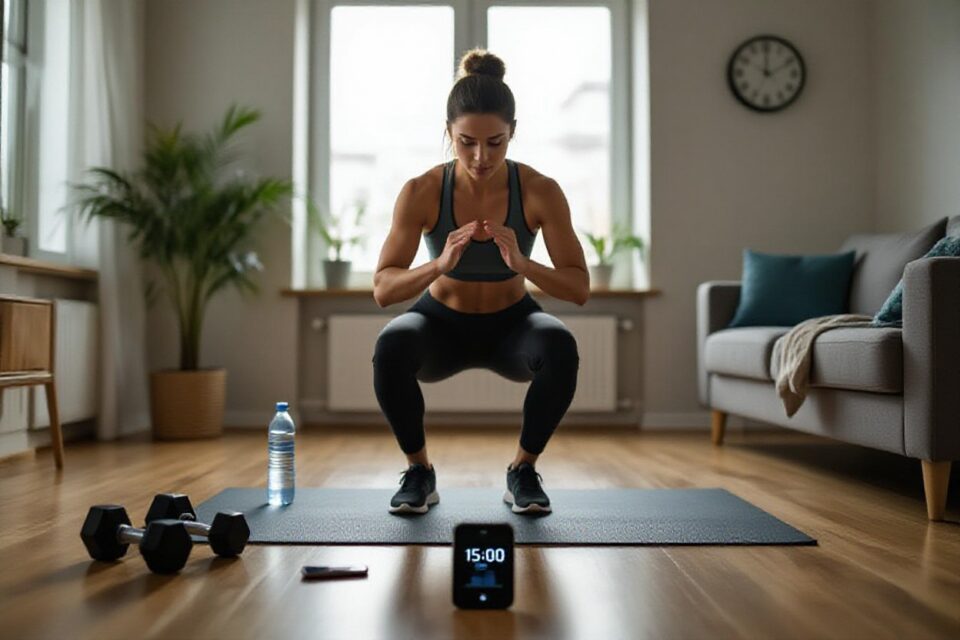
HIIT lets you squeeze serious results into tiny pockets of time, by mixing short bursts of all-out effort with quick rest. You might sprint for 20 seconds, walk for 40, and repeat for 10 rounds. That kind of on-off pattern pushes your heart rate up toward 80-95% of your max, then lets it drop just enough so you can hit it hard again. You’re not just moving – you’re training your body to handle real-life intensity.
Benefits That Make You Want to Jump In
HIIT keeps burning calories long after you drop to the floor, which is why a 15-minute workout can rival a 45-minute jog. You boost VO2 max, improve insulin sensitivity, and strengthen your heart in fewer sessions per week. One study even showed HIIT can cut workout time by 40% and still match traditional cardio results. So yeah, if your schedule’s wild, this style of training has your back.
What really hooks you with HIIT is how much you get for so little time on the clock, because that post-workout burn (the famous EPOC effect) can keep your body using extra energy for up to 24 hours after a tough session. You’re not just torching fat; you’re training your heart to pump more efficiently, your lungs to pull in more oxygen, and your muscles to recruit more fibers with every sprint, jump, or pushup. Over a few weeks, you feel it in your daily life – climbing stairs faster, recovering quicker, and feeling sharper in your head too, since higher intensity training is linked to better mood and focus.
Got 15 Minutes? Here’s What You Can Do!
You know that weird gap before a meeting or while dinner’s in the oven? That’s your 15-minute goldmine. In that tiny window you can knock out 8 rounds of 20-second sprints with 10-second rests, crank through a bodyweight circuit, or do a quick EMOM (every minute on the minute) with squats and push-ups. You’re not “sort of” working out – you’re hitting short bursts where your heart rate lives at 80-90% of max, which studies show can boost VO₂ max in as little as 3 sessions per week.
Super Simple Workouts for the Busy Bee
Picture this: you’ve got a Zoom call in 20 minutes, coffee’s half cold, and you’re thinking, “Too late to work out.” Not even close. You can bang out 5 rounds of 30 seconds high knees, 30 seconds rest, then 5 rounds of squats and wall push-ups and you’re done. No equipment, no warm-up drama, no fancy setup, just move fast, rest brief, repeat. You’ll be sweaty, breathing hard, and weirdly proud that you fit all that into a tiny sliver of time.
Mixing It Up with Cardio and Strength
One of my clients, a nurse on 12-hour shifts, started doing 15-minute HIIT blocks that alternated jump rope with squats and lunges, and her energy went through the roof in 3 weeks. When you pair explosive cardio bursts with bodyweight strength moves, you’re training your heart and your muscles in the same shot. Think 40 seconds fast mountain climbers, 20 seconds rest, then 40 seconds reverse lunges or glute bridges, 20 seconds rest. You get that out-of-breath, heart-thumping feel plus the muscle burn that keeps your metabolism humming long after you’ve closed the workout tab.
So if you want more variety, try building a 15-minute ladder where you rotate 3 moves: 30 seconds squat jumps, 30 seconds rest, 30 seconds push-ups, 30 seconds rest, 30 seconds burpees, 30 seconds rest, and loop that 3 times. Because you’re switching between cardio-focused moves (like squat jumps or burpees) and strength-biased ones (push-ups, lunges, plank variations), you’re letting one system recover while the other works. That little trick lets you keep intensity high without totally wiping yourself out. Over time, you’ll notice you’re banging out more reps in the same time, which is a super simple way to see that your fitness and power are actually improving, not just your sweat level.
My Take on Getting Started
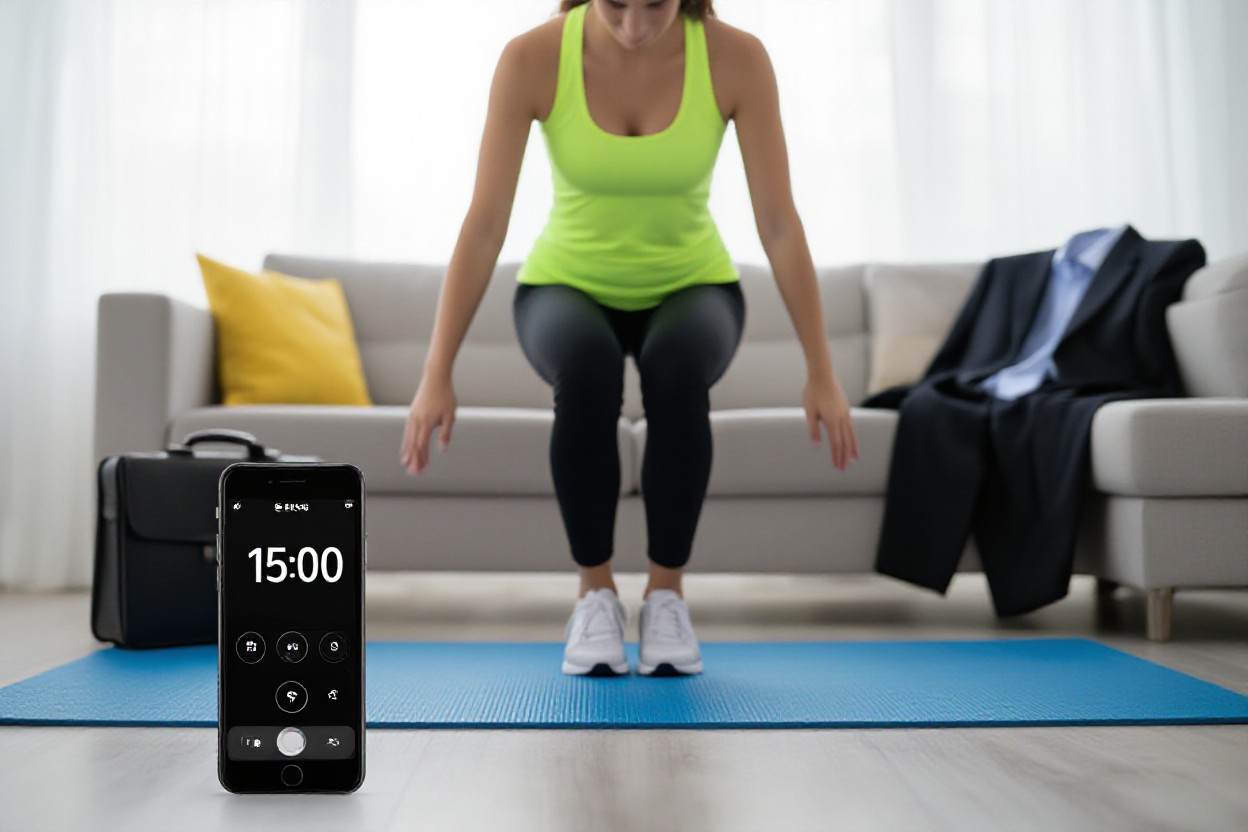
Most people think you need a perfect plan before you start HIIT, but you really just need a low-friction first session. You pick 2 or 3 moves, set a 15-minute timer, and treat it like a test run, not some fitness exam. If your heart rate climbs, you’re breathing harder, and you can still speak in short sentences, you’re in the sweet spot. Then you tweak – a few more seconds of work here, a bit less rest there – and build your own mini system that actually fits your life.
Gear Up: What You Really Need
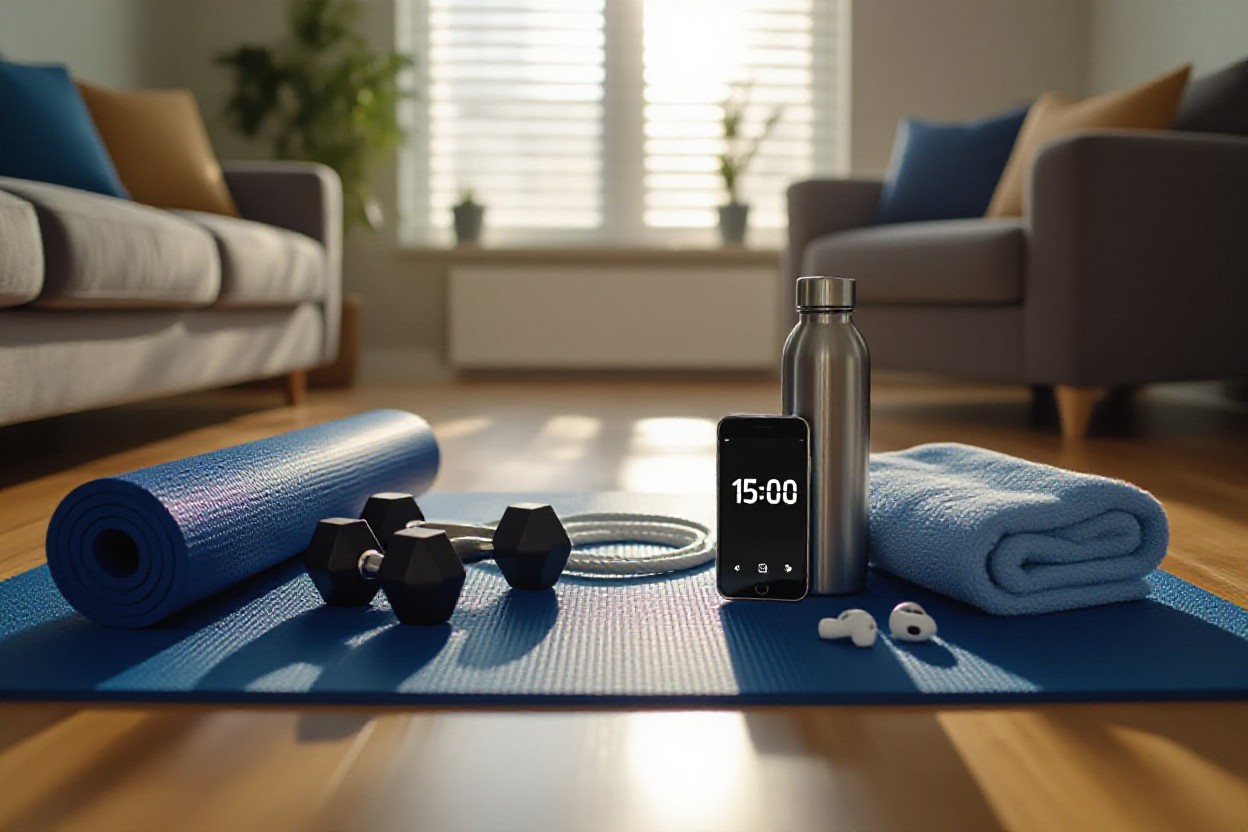
A lot of people assume you need a full-on home gym, but for 15-minute HIIT you mostly need grippy shoes and a decent floor. Your bodyweight already gives you squats, pushups, lunges, mountain climbers, burpees – plenty to torch your lungs. If you want to level up, grab a cheap resistance band or a single dumbbell (10-25 lbs works for most). Aim for gear that lives in a visible spot so it quietly guilt-trips you into actually using it.
Setting the Stage: Finding Your Own Space
Most folks think they need a big dedicated workout room, but you only need a roughly 6-by-6-foot patch where you won’t kick a coffee table mid-burpee. You pick a spot you pass all the time – beside the bed, next to the couch, near the balcony door – so your workout zone is always in your line of sight. And if you can leave a mat rolled out or a kettlebell sitting there, it turns that corner into your “no excuses” area.
What works best is treating your space like a cue, not a stage set for Instagram. You might slide the coffee table a bit, push a chair against the wall, and suddenly your living room has a legit workout lane where you can sprint in place, do sprawls, or crank out jump squats without stomping on Lego. If you share space, you can claim a time slot instead of a whole room – maybe 7:10 to 7:25 is “your” kitchen corner hour with a mat, a towel, and a water bottle. Add tiny touches that help you switch gears fast: a simple playlist ready to go, a small fan if you overheat easily, even laying your shoes by the door so that when the timer hits, you’re moving in under 30 seconds.
Seriously, Can I Do This at Home?
Studies show over 60% of people who stick with workouts long term do them at home, so yeah, you can absolutely crush HIIT in your living room. You only need a bit of floor space, a timer, and your body weight to hit that high intensity sweet spot. You’ll still spike your heart rate, sweat hard, and torch calories in under 15 minutes, without commuting, waiting for machines, or feeling stared at in a crowded gym.
No Gym? No Problem!
About 80% of classic HIIT moves are bodyweight only, so your living room is more than enough to get you breathless and wobbly-legged in the best way. You can rotate things like burpees, mountain climbers, high knees, and squat jumps, using a simple 30-seconds-on, 15-seconds-off setup. You stay flexible, save money, and still get that “I just did something serious” feeling in under 15 minutes.
Tips to Make Your Living Room a Workout Zone
One small 6-by-6 foot area is all you need to turn your living room into a legit HIIT space. Move the coffee table, roll out a mat, and suddenly you’ve got room for lunges, push ups, and plank jacks without smashing your shin on furniture. You can keep a small basket with resistance bands and a yoga mat nearby so it’s super easy to start your 15-minute session anytime, even when you’re tired from work.
- Clear space by sliding tables and chairs back before you start.
- Use a non-slip mat so you’re not sliding on tile or hardwood.
- Keep a small equipment basket with bands, light dumbbells, and a towel.
- Set a visible timer on your phone or TV so you stay locked into intervals.
- After you set up once, you’ll be shocked how much easier it is to hit play and go.
Most people underestimate how much your environment controls your workout habits, which is why setting up your living room right makes sticking with HIIT way easier. When your mat is already out and your bands are in a cute basket by the couch, your brain reads it as normal, everyday stuff, not a big scary event you have to plan. And the cool part is you can keep it flexible – push the table aside, angle the TV, fire up a YouTube timer, and in 60 seconds your space goes from Netflix zone to sweat zone.
- Pick a consistent workout spot so your brain links that corner to training.
- Use a small speaker or playlist to hype your energy in the same way each time.
- Keep a visible water bottle and towel so you don’t wander off mid-interval.
- Anchor resistance bands safely to sturdy furniture, never loose chairs.
- After a week of this setup, your living room will start to feel like your personal studio, not just a place you scroll your phone.
The Real Deal About Intensity: How Hard is Too Hard?
Finding that sweet spot of intensity matters, because HIIT only works if you actually push, but not so hard you burn out or get hurt. As a rough guide, those 20-30 second work intervals should feel like an 8 or 9 out of 10, where you can only say a few words, not chat. If you feel dizzy, nauseous, or sharp pain, that’s not “good tired”, that’s too much. You want to finish sweaty and spent, but still able to walk around your place without wobbling.
Figuring Out Your Own Limits
One easy way to find your line is the talk test: if you can sing, it’s too easy, if you can’t talk at all, you’re probably overcooking it. Aim for that zone where your heart’s pounding, your breathing’s heavy, but you can still squeeze out a quick “yeah” or “no”. Over a few sessions, track how many good form reps you hit in 20 seconds and use that as your personal scoreboard, slowly nudging it up while keeping things safe and controlled.
Listening to Your Body: The Key to Success
Instead of copying some athlete on YouTube, you’ll get way better results by tuning in to your own signals. If your form starts falling apart, or your knees and lower back feel sketchy, that’s your body telling you to back off intensity, not just push through. Shortening intervals from 30 to 15 seconds, or swapping jump squats for regular squats, still builds fitness while keeping you injury-free and consistent.
What really moves the needle long term is how well you notice the little stuff your body tells you each session. Say your heart rate stays sky-high for minutes after a round, or you feel wiped for the rest of the day – that’s data, not drama, and it means you might need more rest or a lighter variation. On the flip side, when you start recovering faster between intervals and your breathing settles sooner, that’s a huge sign your fitness is climbing. You’ll also spot patterns: maybe burpees always flare your wrists, so you switch to squat thrusts and suddenly your joints feel fine and you actually stick with the plan. The more you treat those signals like a personal dashboard instead of background noise, the more you can tweak intensity, exercise choices, and rest breaks so your workouts feel tough, but still doable and sustainable.
Common Mistakes: What Not to Do
Too many people explore HIIT like it’s a 0-to-100 sprint, then wonder why their knees hate them a week later. You skip warmups, go all-out every single day, or copy an athlete’s workout from Instagram that wasn’t built for your fitness level. On top of that, you might rush your form, ignore pain, and cut rest periods because you think “more burn” equals more progress. In reality, those habits fast-track you to fatigue, plateaus, and injuries that steal your consistency.
Avoiding the Rookie Blunders
Picture this: you smash your first HIIT session, feel like a superhero, then your body taps out for four days straight – that’s a classic rookie move. You go too hard, skip proper warmups, ignore technique, and treat rest as optional instead of part of the workout. Instead, you want clean form, realistic intervals, and at least 1-2 recovery days each week. When you scale movements, set a timer, and respect your limits, you actually progress faster and stay in the game longer.
Staying Motivated Through the Slumps
Some weeks you crush every 15-minute session, other weeks your motivation vanishes like your phone battery at 2%. You start scrolling instead of sweating, telling yourself you’ll train “tomorrow” while those skipped workouts quietly add up. To pull yourself out of that slump, you need ridiculously easy entry points like a 5-minute warmup rule, tiny habit goals, and visual wins on a calendar or app so your brain sees progress, not failure.
One trick that works crazy well: make the finish line smaller. On low-energy days, you tell yourself you’ll just do 5 minutes of light movement, maybe marching in place and a few squats, and once you start, 70% of the time you keep going. You can track this in a notes app or on a wall calendar, giving yourself a checkmark for every “showed up” day, not just the perfect workouts.
Another game changer is pairing workouts with existing habits. You might always train right after your morning coffee or as soon as you close your laptop at 5 p.m., so your brain links HIIT with a routine you already do on autopilot. And when motivation dips hard, you lean on accountability: texting a friend your workout plan, joining a simple 30-day challenge, or using a free app that reminds you when it’s HIIT time.
What really keeps you going long term is making it feel fun, not like punishment. Rotate a few different 15-minute routines so you’re not stuck repeating the same burpees forever, blast a playlist that makes you want to move, and celebrate weird little milestones like “10 sessions in a row” or “first week without skipping.”
That sense of progress, even when it’s small, is often what pulls you through those ugly, low-motivation weeks.
Sticking with It: My Hacks for Consistency
Consistency isn’t about superhuman motivation, it’s about making your workouts so simple and baked into your day that skipping feels weirder than doing them. You lean on tiny cues – like laying your shoes by the door or queuing up a Best HIIT Workouts Of 2025: 21 Trainer-Approved Routines … video before bed – so your brain goes on autopilot at workout time. Over a month, those 15 minutes stack up to more than 7 hours of high-intensity work, which is wild when you think about how fast each session flies by.
Building a Routine that Actually Works
Progress usually falls apart when your routine looks great on paper but totally ignores your real life. You set a specific 15-minute window, tie it to something you already do daily (after coffee, after school drop-off, right before your shower), and keep 2 or 3 go-to workouts so you never waste time choosing. Suddenly you’ve got a repeatable system, not a random burst of willpower.
Rewarding Yourself in Fun Ways
Small rewards are like fuel for your motivation muscle, especially on days when your legs feel like concrete. You track streaks on a simple wall calendar, treat yourself to a fancy coffee after 3 sessions, or bank $2 in a “fitness fun fund” each time you show up so your new leggings or headphones literally come from your sweat. That way the habit feels less like punishment and more like you getting paid to move.
Instead of waiting for some huge milestone, you stack tiny wins and tiny treats so your brain gets hooked on the cycle. Maybe every 10 workouts you rent that cheesy movie guilt-free, after 20 you grab a new resistance band, after 40 you book a massage because your body earned it, not as some random splurge. And if your budget’s tight, think non-money perks – calling a friend just to brag a little, picking the next playlist, or claiming the best spot on the couch that night. The more fun and personal these rewards feel, the easier it is for your future self to say “yeah, I’ll show up again tomorrow.”
FAQ
Q: Why are 15-minute HIIT workouts suddenly everywhere on social media?
A: Over the last couple of years, short HIIT clips have blown up on TikTok and Instagram because people are busy but still want visible results without living in the gym. You see creators posting “15 minutes with me” workouts that fit between Zoom calls, kid pickups, or late-night Netflix, and that vibe really matches how most of us live now.
A: What’s changed is that more studies are backing up what trainers have been saying for a while – properly structured short HIIT sessions can improve cardio fitness and help with fat loss in less time than long steady workouts. So it feels less like a fad and more like, ok, this is actually a legit option if your schedule is wild.
Q: Can a 15-minute HIIT workout really be effective, or is that just hype?
A: Short answer: yep, it can work. The catch is that those 15 minutes need to be focused, intense, and not just scrolling your playlist in between half-hearted squats.
A: HIIT is built around working hard in short bursts, then backing off briefly to recover, so you get a big heart rate response in a small window. If you push to about 7 or 8 out of 10 on effort during the work intervals, you can improve cardiovascular fitness, burn a decent number of calories for the time spent, and keep your metabolism slightly elevated afterward. It’s not magic, but for busy people it’s a very efficient tool in the toolbox.
Q: What does a simple 15-minute HIIT session for busy people actually look like?
A: A really straightforward structure is 3 parts: warm up, intervals, quick cool down. So you might do 3 minutes of light movement first (marching in place, arm circles, easy squats) to get your joints ready and your heart rate creeping up.
A: Then the “meat” of it could be 8 rounds of 30 seconds work and 30 seconds rest. Think moves like squats, pushups on a counter, fast marching, mountain climbers, or quick steps on a low stair. Finish with 2 minutes of slow walking around your living room and some gentle stretching. That’s it – 15 minutes, done, and you can get on with your day.
Q: How many times per week should I do 15-minute HIIT if I’m swamped with work and family stuff?
A: For most busy folks, 2 to 4 sessions a week is a sweet spot. If you’re totally new to this kind of training, starting with 2 days a week is more than enough to get your body used to the intensity without feeling wrecked.
A: People who already move a bit, maybe walk a lot or do some light gym stuff, can often handle 3 or 4 of these quick HIIT days as long as they’re not going all-out every single round. A nice approach is to have one or two sessions that are pretty intense, and the others a bit gentler, so your body actually has a chance to adapt instead of just feeling tired all the time.
Q: I’m not super fit – can I still do quick HIIT, or is it only for hardcore people?
A: You definitely don’t need to be an athlete to do 15-minute HIIT. The key is to adjust the moves and the intensity so it matches where you’re at right now, not where some shredded trainer on YouTube is.
A: For example, instead of jumping jacks, do step jacks. Instead of regular pushups on the floor, use the wall or the kitchen counter. You can also tweak the work-rest ratio, like 20 seconds work and 40 seconds rest instead of 30-30. As long as it feels challenging for YOU and your breathing goes up during the work parts, you’re doing HIIT at your own level.
Q: What’s the best timing pattern for a 15-minute HIIT workout when I’m squeezed between meetings?
A: A popular and super simple format is 30 seconds hard, 30 seconds easy, repeated 8 to 10 times. That gives you about 8 to 10 minutes of intervals plus warm up and cool down around it and it fits really nicely into a 15-minute block between calls.
A: Another option if you like feeling totally spent is 20 seconds all-out, 10 seconds rest, repeated for 4 to 6 minutes with a short break in the middle. That style is intense, so it’s better if you already have some experience. You can even mix it up week to week so you don’t get bored, as long as you still hit that pattern of short, hard bursts followed by a breather.
Q: Do I need equipment for quick HIIT, or can I do it in my living room with zero gear?
A: You can 100% do a solid 15-minute HIIT session with no equipment at all. Bodyweight moves like squats, lunges, pushups, high knees, glute bridges, fast step-ups on a sturdy step, they all work great in a tiny space like a living room or bedroom.
A: If you do have a couple of basic items, like a pair of dumbbells or a resistance band, you can mix those in for variety and a bit more strength work. Think squat to press with dumbbells, band rows, or deadlifts with weights. But if all you’ve got is a bit of floor and maybe a chair, you’re still completely good to go.
Q: How do I stay safe during 15-minute HIIT sessions so I don’t tweak a knee or burn out?
A: Safety with HIIT is mostly about pacing yourself and choosing smart movements. Start your sessions with a few minutes of light warm up, keep your first week or two at a slightly lower intensity, and build up gradually instead of trying to prove something on day one.
A: Also pay attention to impact. If your joints complain when you jump, swap in low-impact options like step-back lunges, marches, or fast but controlled bodyweight moves. And if you feel dizzy, sharp pain, or your breathing feels off in a not-normal way, pause the workout, sit down, and if anything feels really wrong, call a professional or your doctor. Short workouts are supposed to make life easier, not add new problems.
