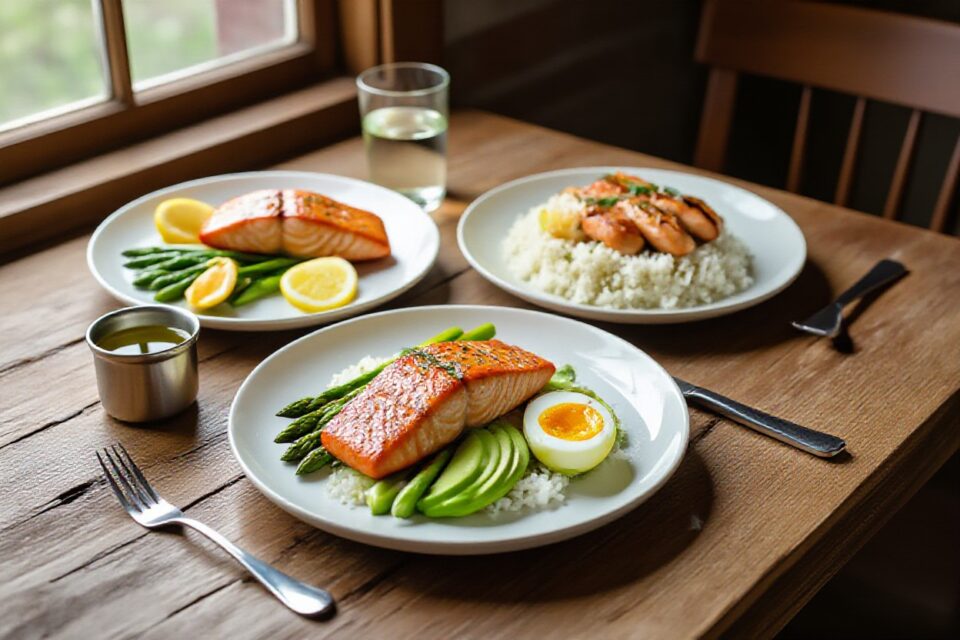
Quixotic diets are out, you’re about to eat like you actually enjoy your life while still torching stubborn fat. You want meals that keep you full, taste amazing, and don’t send your blood sugar on a roller coaster of doom, right? So in this guide you’ll load up on lean protein, kick a bunch of random carbs to the curb, and still feel like you’re getting away with something.
Why Go High-Protein and Low-Carb, Anyway?
Turns out, your body isn’t all that thrilled about juggling blood sugar rollercoasters while you try to lose weight. When you cut carbs a bit and bump up protein, you naturally eat fewer calories without feeling like a starved raccoon in the pantry at midnight. More protein keeps you satisfied, supports lean muscle, and can slightly boost how many calories you burn, which quietly stacks the odds in your favor.
The Real Deal About Weight Loss
Weight loss basically comes down to a calorie deficit, but how you get there makes or breaks your sanity. High-protein, lower-carb setups help you eat less without white-knuckling cravings all day. In several studies, people bumping protein to around 25-30% of calories lost more fat, kept more muscle, and reported less hunger. So you’re not just shrinking, you’re reshaping.
What’s So Special About Protein?
Protein is like your behind-the-scenes bodyguard, doing a ton of work while getting almost zero hype. It helps you hang onto precious muscle when the scale is dropping, which keeps your metabolism from tanking. On top of that, protein has the highest thermic effect of food, meaning your body burns more calories just digesting it, so your meals quietly work overtime for you.
What really flips the script is how full protein keeps you compared to the same calories from bread or sugar. In one study, people who raised protein to about 30% of calories ate up to 400 fewer calories per day without trying, just because they weren’t as snack-obsessed. You might notice that when you start your day with eggs and Greek yogurt instead of a muffin, your mid-morning “I need something now” meltdown just… doesn’t happen.
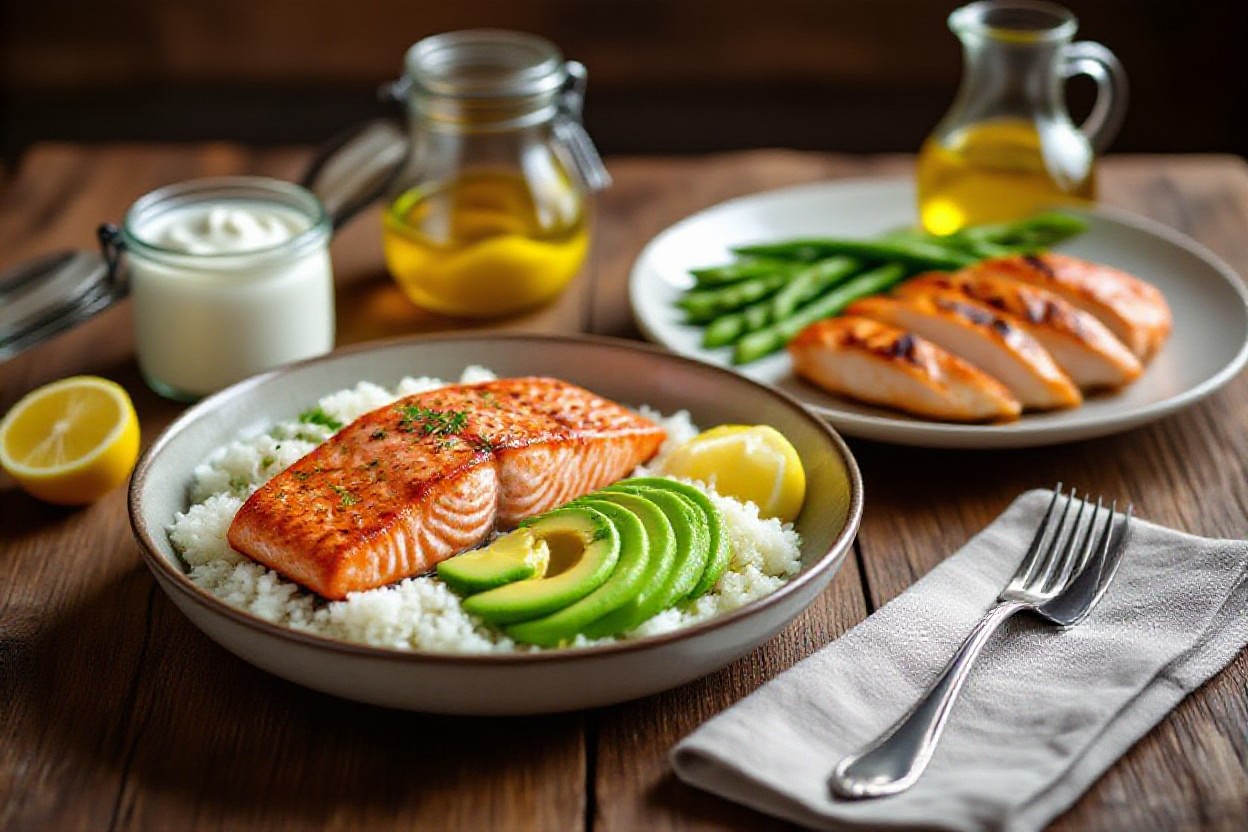
My Favorite Easy High-Protein Low-Carb Recipes
Everyone on social lately is flexing high-protein plates, but you don’t need a ring light to eat like that at home. You can throw together 30 gram protein meals in under 20 minutes by leaning on affordable basics like chicken thighs, cottage cheese, frozen veg and eggs… lots of eggs. The fun part is mixing textures – crispy, creamy, crunchy – while still keeping carbs under about 20 grams per meal so your blood sugar stays calm and your jeans stay happy.
Seriously Tasty Chicken Dinners
Air fryers basically turned weeknight chicken into a personality, and you can use that to your advantage. Try crispy paprika chicken thighs with a 3 ingredient Greek yogurt garlic sauce and a side of roasted broccoli, you’re looking at roughly 40 grams of protein and under 12 grams of net carbs. Or go lazy-gourmet with pesto-stuffed chicken breasts baked over cherry tomatoes so the whole thing cooks in one pan and your kitchen doesn’t look like a war zone.
Honestly Delicious Breakfast Ideas
Breakfast totally pulls its weight when you treat it like a protein project instead of a pastry parade. A simple veggie-loaded omelet with cheddar, plus half an avocado, can hit 30 to 35 grams of protein with around 10 grams of net carbs. Or swap the usual cereal for a thick Greek yogurt bowl topped with chia seeds, toasted nuts and a few berries so you get crunch, creaminess and staying power without a mid-morning carb crash.
What really changes the game with these breakfasts is how fast you can throw them together on a half-awake Tuesday. You whisk 2 or 3 eggs, dump in pre-cut peppers and spinach from the fridge, add a small handful of cheese and suddenly you’ve got a café-level plate that keeps you full for 4 hours straight. If you’re more of a sweet breakfast person, mixing 150 grams of plain Greek yogurt with a scoop of whey, plus 10 grams of chia and 15 grams of walnuts, gives you over 40 grams of protein while keeping carbs low enough that you don’t need a nap at 10 a.m. And because these are so simple, you can batch-prep toppings on Sunday, then just assemble in 3 minutes flat when you’re rushing out the door.
Are You Ready for Meal Prepping?
One Sunday you toss chicken, veggies, and eggs into containers, and by Wednesday you feel like a meal-prep wizard who also still has a life. That’s the energy you’re going for here: prepping a few high-protein, low-carb basics so future-you doesn’t panic-order fries at 9 p.m. You might batch-cook 1 to 2 proteins, roast a sheet pan of veggies, then mix and match with ideas from 18 High-Protein, Low-Carb Meals to Make on Repeat. Small effort now, ridiculously easier choices later.
My Take on Planning Ahead
One client used to wing dinner every night, then wondered why pizza kept “mysteriously” appearing – once we blocked 45 minutes on Sundays to plan 3 simple protein-focused meals, her weekly calories dropped by almost 1,000 without her feeling deprived. You just sketch out what you’ll eat for lunch and dinner, list ingredients, and shop only for that. No Pinterest marathon, no 27-step casseroles, just repeatable meals you can almost cook on autopilot.
Must-Have Containers for Success
A friend of mine jumped into meal prep with dollar-store containers, then spent half her week hunting for missing lids and eating soggy zucchini, which is… not the vibe. When you invest in sturdy, leak-proof containers, your food stays fresh longer, portions stay consistent, and you actually want to grab what you prepped instead of bailing for takeout. Think glass or BPA-free plastic with tight lids, a few divided trays, and some 8-12 ounce cups for snacks so your protein portions stay on point.
What really changes the game is variety in container sizes and shapes, because your grilled salmon does not want to be smashed into the same tiny box as your Greek yogurt. You’ll want 2-3 larger containers (4-5 cups) for bulk proteins, a stack of medium ones (3 cups) for ready-to-grab lunches, and a few small ones (1 cup) for things like nuts, dips, or chia puddings. And if you grab microwave-safe glass, your reheated chicken tastes way less sad, plus you’re more likely to keep prepping when your gear actually works for you instead of against you.
How Do I Keep It Fun and Varied?
You’d be shocked how far a couple of spice mixes and a new cooking method can take you when you’re eating high-protein and low-carb on repeat. Rotate a few base proteins, swap veggie sides, and suddenly your “diet food” tastes like something from a street food market instead of a sad office lunch. When you treat recipes like mix-and-match pieces, you unlock a ridiculous amount of variety without needing a chef’s degree or a 40-ingredient pantry.
Switchin’ It Up with Flavors
Wild thing is, you can eat chicken every day and it never has to taste the same twice if you play with flavor profiles. Think smoky paprika and lime one night, garlicky yogurt marinade the next, then soy-ginger with sesame after that, all still low-carb but totally different vibes. You keep your macros tight, your taste buds interested, and your brain off the “I’m dieting” drama.
Quick Tips for Staying Motivated
Funny enough, it’s not your willpower that usually quits first, it’s your boredom. Tiny rituals help a lot: pre-logging tomorrow’s meals in your app, snapping progress pics every two weeks, or making one new high-protein recipe every Sunday so you’ve got something to look forward to. Assume that your motivation will dip and you’ll need these little systems to quietly carry you through the slow weeks.
- High-protein meal prep lets you batch-cook 3-4 days of food so you’re not negotiating with your cravings at 9 p.m.
- Low-carb snacks like Greek yogurt, jerky, or cheese sticks keep you from face-planting into office pastries when you’re stressed.
- Progress tracking with waist measurements or weekly weigh-ins shows you trend lines, not day-to-day noise, which keeps your head straight.
- Non-scale victories like better sleep, clearer skin, or climbing stairs without gasping are often what keep you in the game long term.
- Assume that building automatic habits, like a default breakfast and a set grocery list, will quietly do more for your results than relying on hype or New Year’s energy.
Most people think they need more discipline, but what you actually need is less friction in your day. So you make it stupid-easy: keep a go-to high-protein breakfast on autopilot, stock your freezer with pre-portioned meats, and save 2-3 “emergency” low-carb meals for nights when cooking sounds illegal. When you tie your eating to existing routines – like always prepping tomorrow’s lunch right after dinner – it stops feeling like a project and starts feeling like your normal life.
Assume that motivation will come and go, but your little systems, check-ins, and default meals will keep doing the heavy lifting quietly in the background.
- Habit stacking works great: link meal prep to something you already do, like your Sunday podcast or Netflix time.
- Accountability through a friend, coach, or online group can cut dropout rates by up to 65% in some studies, so yeah, it matters.
- Visual cues like a wall calendar where you mark workout and protein goals gives your brain that tiny dopamine hit every time you tick a box.
- Flexible structure (80% planned, 20% spontaneous) keeps you on track while still letting you have a social life and the occasional burger night.
- Assume that if you keep your system simple, repeatable, and slightly fun, you’ll stay consistent long enough to see the kind of fat loss most people quit right before hitting.
What About Snacks?
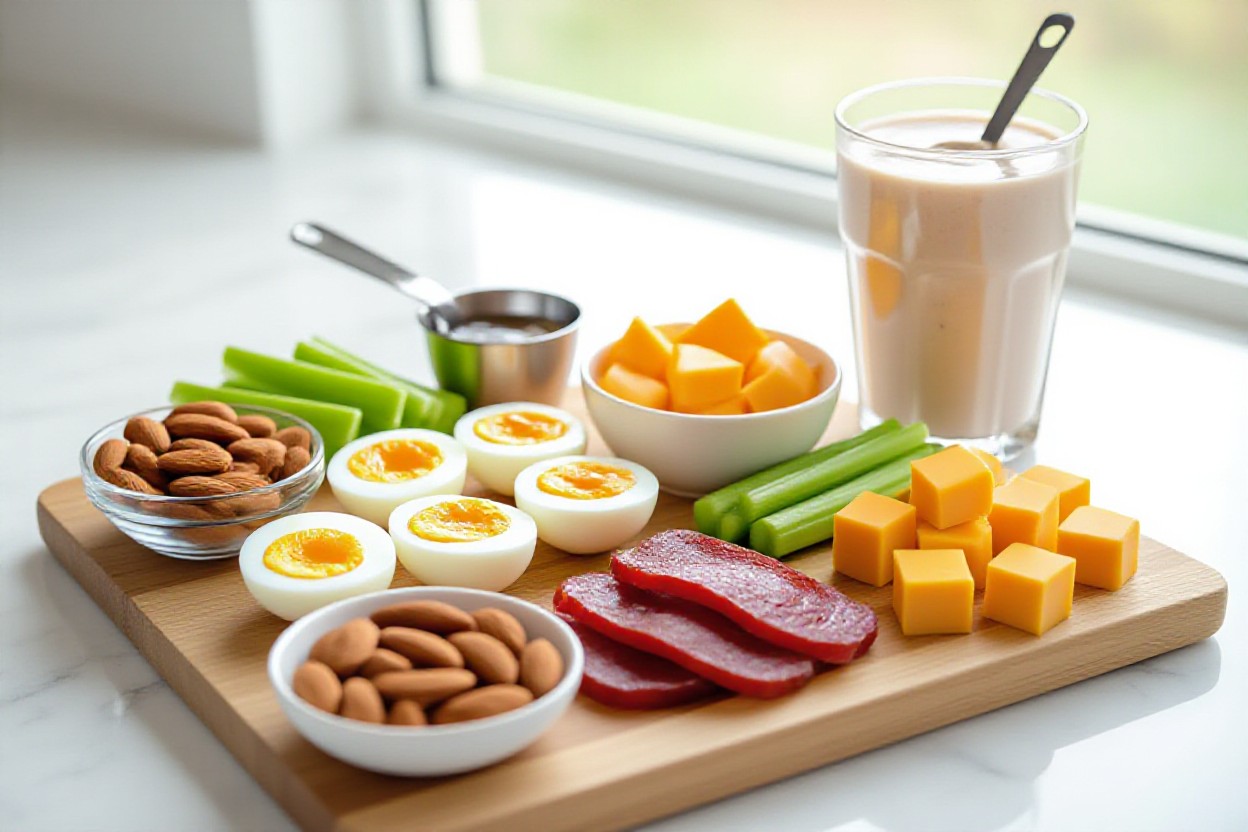
Compared to your main meals, snacks are where your progress quietly lives or quietly falls apart. When you swap random carbs for 10-20 grams of protein per snack, you flatten those 3 p.m. crashes, stay under control at dinner, and stop prowling the kitchen at midnight. Think Greek yogurt instead of granola bars, jerky instead of crackers, and cottage cheese instead of pretzels – tiny tweaks, huge payoff over a week of eating.
Satisfying Bites That Keep You Full
Rather than nibbling on empty carbs that vanish in 30 minutes, you want snacks that hit at least 8-10 grams of protein and under 10 grams of net carbs. A small handful of roasted almonds with a cheese stick, turkey roll-ups around cucumber slices, or half a cup of cottage cheese with a few raspberries will keep you sane between meals. You feel like you’re grazing, but your blood sugar stays boringly stable, which is exactly what you want.
Easy DIY Protein Snacks
Instead of hunting for the perfect protein bar label in the supermarket, you can crank out your own stuff in 10 minutes flat. Hard-boiled eggs with smoked paprika, little chicken salad lettuce cups, or Greek yogurt mixed with protein powder and cocoa give you 15-25 grams of protein for barely any carbs. You control the ingredients, the salt, the sweeteners, and you skip all the weird fillers that like to sneak into packaged “fitness” snacks.
Because you’re in charge of the kitchen, you can batch-cook a whole lineup of grab-and-go options that save you from drive-thru regret later. Try a muffin tray full of mini egg bites with spinach and bacon, jars of chia pudding made with unsweetened almond milk and whey, or little bags of homemade trail mix with roasted nuts, coconut flakes, and a few dark chocolate chips for sanity. Aim for a simple rule: each snack should hit at least 10 grams of protein and still fit in your hand, so you’re not accidentally turning “just a snack” into a second lunch. And if you prep 2 or 3 of these on Sunday, your weekday self will quietly want to high-five you.

Real Talk: Troubleshooting Common Issues
At some point, your high-protein low-carb magic hits real-life chaos: late nights, social stuff, cravings that feel like a full-time job. You tweak recipes, you meal prep, and then your weight just… stalls. When that happens, watching something quick like 5 MINUTE MEALS FOR WEIGHT LOSS! Low Carb, High … can kick you back into simple, doable action instead of all-or-nothing drama.
What to Do When You Hit a Plateau
Plateaus usually mean your body has adapted, not that your plan is broken. You might tighten up portions (that “tablespoon” of nut butter that’s actually 3), bump protein from 80 g to 100 g, or add a 10-minute walk after meals to nudge insulin down. Track for 3 to 5 days, get honest about hidden carbs, and adjust just one variable at a time so you know what actually works.
Honestly, It’s Okay to Have Off Days
When a random Wednesday turns into pizza, fries, and a dessert you absolutely didn’t plan, it doesn’t mean your progress is toast. You just get back to your usual high-protein low-carb meals at the very next opportunity, not next Monday, not “after things calm down”. That single off day barely moves the needle compared to the other 20-plus meals you crush every week.
Instead of spiraling into guilt, you treat off days like data: maybe you skipped lunch, hit 3 pm ravenous, then face-planted into snacks because your willpower was basically running on fumes. So you fix the pattern, not punish yourself – add a 25 g protein snack, keep an emergency freezer meal, drink water before the 9 pm raid. You pay attention to how your body feels the next morning, you note the bloat, the sluggish sleep, and you use that as a mental screenshot: “yep, not worth doing every day.”
That way, off days become speed bumps, not roadblocks.
Final Words
Conclusively, your high-protein low-carb game might just be the secret sauce that makes weight loss feel way less miserable and way more doable. You’ve got simple recipes, fast prep, big flavor – and meals that actually keep you full so you’re not raiding the pantry at 11 p.m.
So go ahead, tweak, experiment, swap ingredients, make it yours. Because when your food fits your real life, that’s when you actually stick with it.
FAQ
Q: How much protein should I actually eat daily for weight loss on a low-carb plan?
A: Research often points to around 0.7-1 gram of protein per pound of body weight for people who are active and trying to lose fat, so if you weigh 150 pounds, you’re usually looking at roughly 105-150 grams of protein a day. That sounds like a lot on paper, but once you spread it over 3-4 meals, it suddenly feels way more doable.
Most people do well aiming for about 25-40 grams of protein per meal, then filling in any gaps with snacks like Greek yogurt, cottage cheese, or a protein shake. So you might have 30 grams at breakfast, 35 at lunch, 35 at dinner, and a 20-gram snack and you’re there.
You don’t have to hit the exact same number every single day either, your body cares more about the general pattern over the week. Focus on building each plate around a solid protein source first, then add low-carb veggies and healthy fats on top of that foundation.
Q: What are some easy high-protein low-carb meals I can make when I’m super busy?
A: Surveys show that lack of time is one of the top reasons people ditch healthy eating, so quick high-protein low-carb meals are kind of a lifesaver. A simple go-to is a chicken or turkey lettuce wrap: grab pre-cooked rotisserie chicken or sliced turkey, toss with a bit of mayo or Greek yogurt, add some crunchy veggies, and wrap it in romaine or butter lettuce.
Another super fast option is an egg scramble: eggs, a handful of cheese, pre-cut veggies, and maybe some leftover meat from last night. It takes about 5-7 minutes, tops. You can also do a “cheeseburger bowl” with ground beef or turkey, shredded lettuce, pickles, tomato, mustard, and a little cheese – all the burger flavor without the bun.
For nights when you really can’t be bothered, keep it stupid simple: grilled or pan-seared salmon, a bag of microwave steamable veggies, and a spoon of pesto or butter. Not fancy, but it ticks the boxes – high protein, low carb, and on the table fast.
Q: Can I still lose weight with high-protein low-carb meals if I don’t track calories?
A: Studies consistently show high-protein diets naturally reduce appetite, so a lot of people do lose weight without tracking a single calorie. Protein keeps you full, slows digestion, and makes it way harder to overeat compared to a low-protein, high-carb pattern where you’re hungry every couple of hours.
That said, calories still matter in the background, even if you never log them. If your high-protein low-carb meals are drenched in oils, nut butters, cheese, and creamy sauces, you can absolutely eat enough to stall or reverse weight loss. Energy balance doesn’t magically disappear just because carbs are lower.
A good middle ground is “light tracking”: you don’t have to weigh every gram of food, but you can be mindful of portion sizes on higher fat items and try to keep snacking under control. If the scale won’t budge for a few weeks, that’s usually a nudge to tighten portions or track for a few days just to get a reality check.
Q: What are the best proteins for quick low-carb recipes that aren’t boring chicken breast?
A: Data from food consumption surveys shows most people default to chicken breast as their “healthy” protein, which is fine, but wow does it get old fast. If you’re already sick of it, you’ve got a ton of other options that still fit a low-carb setup.
Great proteins for variety: salmon, tuna, and sardines (canned or fresh), shrimp, extra-lean ground beef or bison, turkey sausage, pork tenderloin, cottage cheese, Greek yogurt, tofu, tempeh, and eggs in every form you can imagine. Each of these works in 10-15 minute recipes if you keep things simple.
Think shrimp stir-fry with frozen veggies, Greek yogurt chicken salad, tuna stuffed in bell peppers, tofu pan-fried with soy sauce and garlic, or cottage cheese bowls with berries and nuts. Rotate your proteins week to week and your meals will feel a whole lot less like “diet food”.
Q: How do I make high-protein low-carb meals actually tasty without loading up on sugar or bread?
A: Taste buds adapt in roughly 2-4 weeks according to a bunch of nutrition studies, which means your “need” for super sweet or bready foods often fades faster than you think. In the meantime, flavor is your best friend so you don’t feel like you’re just chewing on plain chicken and broccoli forever.
Use sauces and seasonings aggressively: garlic, onion, chili flakes, smoked paprika, curry powder, soy sauce, sriracha, hot sauce, pesto, salsa, chimichurri, and spice blends like taco or Cajun seasoning. Most of these add basically zero or trivial carbs but completely change the personality of the meal.
Acid and salt are game changers too. A squeeze of lemon or lime, a splash of vinegar, and a pinch of flaky salt can make grilled meat and veggies taste 10 times better. If your high-protein low-carb food tastes bland, it usually needs more fat, more acid, more salt, or more spice – sometimes all four.
Q: What are some high-protein low-carb breakfast ideas that keep me full till lunch?
A: Protein at breakfast has been shown to reduce cravings and late-night snacking, which is pretty handy when you’re trying to lose weight. One simple option is a veggie omelet with cheese and some meat like ham, turkey, or chicken sausage, plus a side of avocado for healthy fats.
Another great pick: Greek yogurt parfait made low-carb. Use plain Greek yogurt, add a small handful of berries, some chia or flax seeds, and chopped nuts for crunch. It tastes like a treat but packs a serious protein punch and decent fiber too.
If you like grab-and-go, make egg muffins in advance: whisk eggs with chopped veggies, cheese, and maybe bacon or turkey, pour into a muffin tin, and bake. Keep them in the fridge so you can just reheat 2-3 in the morning. Pair with coffee and you’re out the door in 5 minutes.
Q: How can I avoid feeling tired or low-energy when I cut carbs and focus on protein?
A: Studies on low-carb diets often show a short “adaptation phase” of 1-2 weeks where people feel a bit sluggish, which is super common and usually temporary. Your body is adjusting to using a bit more fat for fuel instead of depending heavily on quick carbs all day long.
To make that transition smoother, keep your hydration and electrolytes on point: plenty of water, plus sources of sodium, potassium, and magnesium. A bit of broth, some extra salt on your food, leafy greens, avocado, and maybe a magnesium supplement can help a lot with that weird tired or “foggy” feeling.
Also, don’t nuke your carbs overnight if you don’t want to. You can reduce carbs gradually, keeping some carbs around workouts or in the evening if that feels better. As long as your overall intake is lower and your protein is high, you can still lose weight without going full zero-carb mode.
