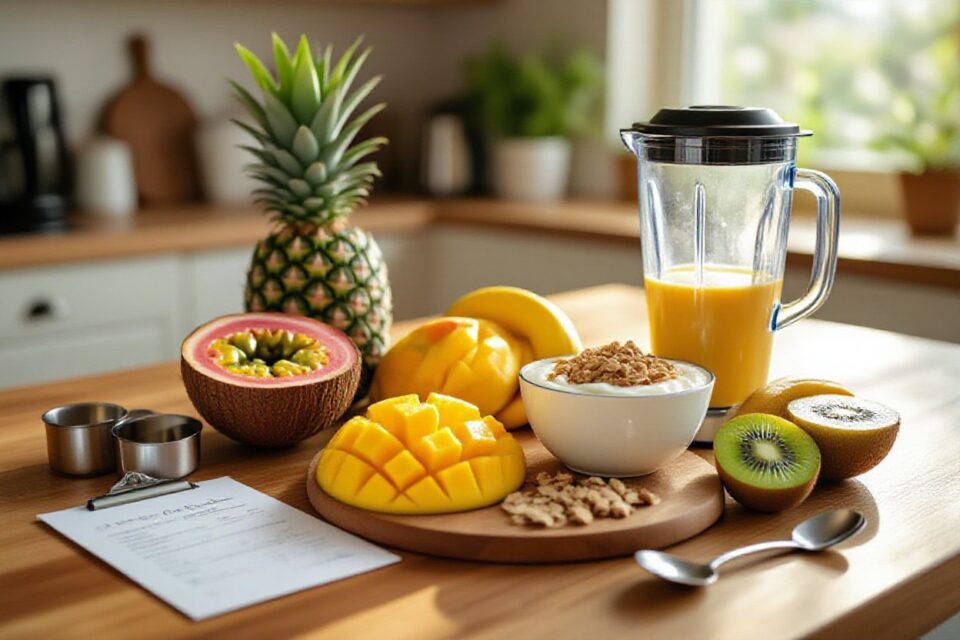
Most mornings you probably grab the same old snack without thinking, but once you slice open a ripe mango or crack a cold coconut, your whole idea of “healthy eating” kinda shifts, right? In this post, you’ll see how tropical fruits like mango, pineapple, papaya and guava can turn your everyday meals into seriously nutrient-dense plates, boosting your energy, skin, and digestion. You’ll also get simple recipes so you can actually use this stuff in real life, not just read about it and forget.
Why Tropical Fruits are the Real Deal for Your Health
With grocery apps now tracking your vitamin intake and smoothie bars listing antioxidant scores, you’re probably noticing tropical fruits popping up everywhere – and for good reason. These bright, juicy powerhouses quietly pack more than just vacation vibes, they deliver dense nutrition, protective plant compounds, and steady energy that can completely upgrade how you feel day to day. When you start swapping in mango, pineapple, papaya or guava, you’re not just changing flavors, you’re changing what your body can actually do.
Nutritional Goldmines – What Makes Them Special
Instead of empty calories, you’re getting serious value in every bite, like mango giving you over 60% of your daily vitamin A in a single cup, or guava hitting more vitamin C than 3 oranges. Many tropical fruits combine fiber, electrolytes like potassium, and natural sugars that digest slower than you think, so your blood sugar gets a softer landing. On top of that you’ve got unique phytonutrients, from bromelain in pineapple to papain in papaya, quietly working behind the scenes for your gut and immunity.
How They Help Your Body – The Benefits You Didn’t Know
Beyond the usual “vitamins and fiber” story, tropical fruits can actively support your gut health, joint comfort, and long term heart protection in ways most people never talk about. Enzymes in pineapple and papaya help your body break down protein more efficiently, while the soluble fiber in mango and passion fruit feeds beneficial gut bacteria that influence everything from mood to weight. On the heart side, potassium rich options like banana and guava can help keep blood pressure in check, especially if your diet’s a bit salty. You end up with food that tastes indulgent but quietly behaves like a targeted wellness plan.
When you zoom in a bit, the benefits start stacking up faster than you expect, especially if you eat these fruits regularly instead of once-in-a-blue-moon. Pineapple’s bromelain, for example, has been studied for reducing post workout soreness and supporting recovery so if you train hard or sit stiff at a desk all day, that matters. Papaya’s combo of vitamin C, vitamin E, and beta carotene forms a sort of natural shield for your cells, helping lower oxidative stress that’s tied to premature aging and lifestyle diseases. And because fruits like kiwi, guava, and passion fruit deliver 100 to 200% of your daily vitamin C in a cup, you’re giving your immune system a steady stream of backup, not just a panic dose when you get sick – which means fewer energy crashes, better skin, and a body that actually keeps up with your schedule.
What’s My Favorite Tropical Fruit?
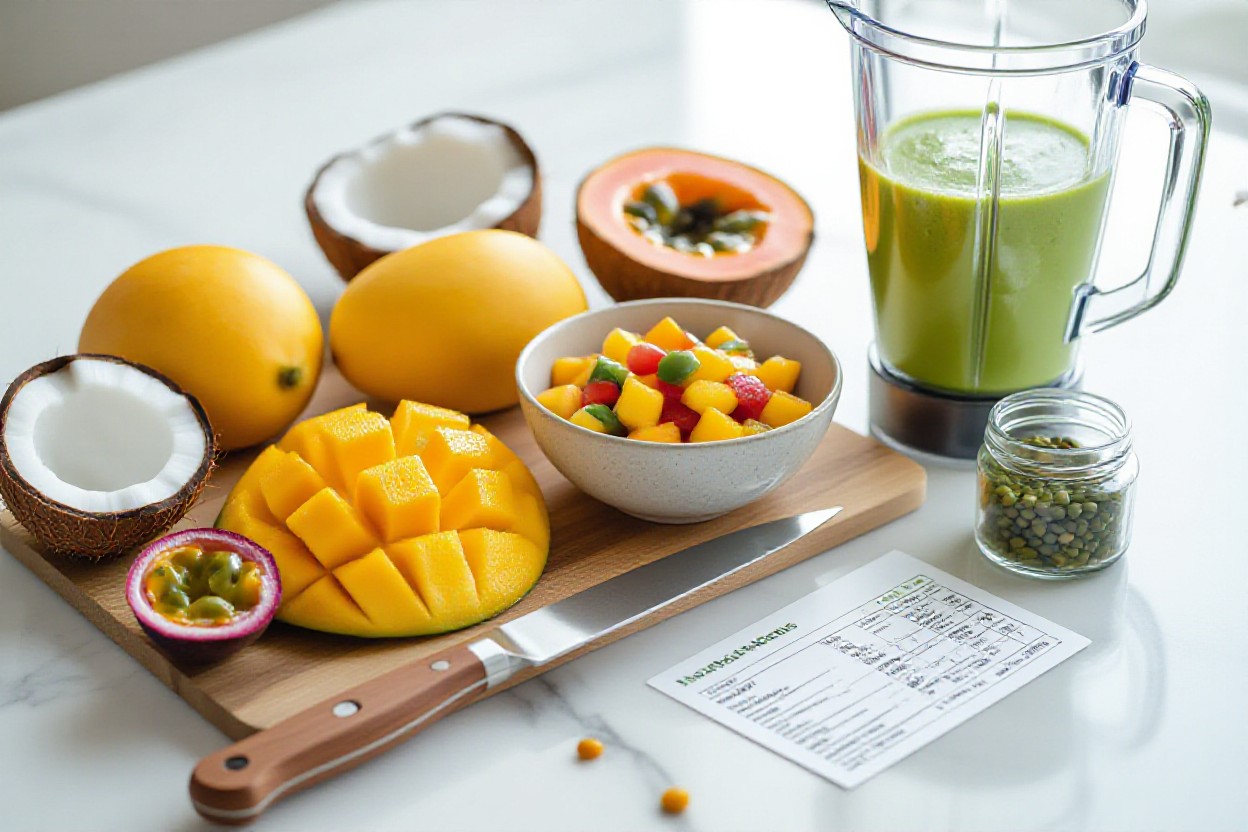
Scrolling through TikTok lately, you’ve probably seen it too: mango on everything, from overnight oats to spicy salsa on fish tacos. That trend totally lines up with what I’ve seen in nutrition consults – mango is the tropical MVP. You get sweetness like dessert, but also fiber, vitamin C, and carotenoids your eyes absolutely love. And when you freeze it, blend it, pickle it, or grill it, you’ve basically got four different foods in one.
This Fruit’s Got Game – Health Perks and Interesting Facts
Mango hits that sweet spot where flavor meets legit science-backed benefits. You get around 70 mg of vitamin C per cup, plus beta-carotene that your body flips into vitamin A to support your vision and immune system. Some studies even link mango polyphenols to better blood sugar control when you pair them with protein and fat. Fun fact: there are 500+ varieties globally, and some of the more fibrous ones actually keep your gut regular in a super gentle way.
How to Enjoy It – Recipes You’ll Love
Try dicing ripe mango into a lime-chili salad with cucumber and red onion, or toss it over Greek yogurt with hemp seeds for a 20-gram protein breakfast that still feels like dessert. You can also blend frozen mango chunks with coconut water for a 3-ingredient sorbet that sidesteps added sugar completely. On savory nights, mango pico de gallo over grilled salmon gives you a fast, high-omega-3 dinner that tastes restaurant-level.
For even more ways to work it into your week, start with a simple mango chia pudding: stir 3 tablespoons chia seeds into 1 cup coconut milk, let it sit, then top with half a chopped mango and a sprinkle of pumpkin seeds for extra magnesium. On busy days, you can throw mango, spinach, tofu, and ginger into a blender and you’ve basically built a full lunch that hits protein, fiber, and antioxidants in one glass. If you’re into batch cooking, make a big bowl of mango black bean salad with lime, cilantro, and corn, stash it in the fridge, and use it three different ways – spooned over rice, wrapped in tortillas, or just eaten straight from the container when you’re starving at 4 p.m.
The Lowdown on Tropical Fruit Smoothies
You care about smoothies because they’re basically the easiest way to sneak a small rainbow of nutrients into your day without feeling like you’re “being healthy” all the time. Tossing mango, pineapple, banana or papaya in a blender gives you a fast hit of vitamins, hydration and fiber with almost zero cooking skills. And when you tweak portions or add protein, you can turn what used to be a sugar bomb into a legit balanced snack or even a light meal.
Why They’re So Good for Ya – Nutritional Benefits
What really matters here is how quickly a tropical smoothie can upgrade your daily nutrient game. A basic pineapple-mango blend can give you more than 100% of your vitamin C needs, plus potassium for blood pressure and natural enzymes like bromelain that may help digestion. When you add Greek yogurt, chia or hemp seeds, you bump up protein and omega-3s, which helps keep your blood sugar steadier than just fruit juice alone.
Easy Recipes to Get You Started
You don’t need fancy ingredients or a thousand-step method, you just need a few go-to combos that actually taste good. Try a simple mix of 1 cup frozen mango, 1/2 banana, 1 cup coconut water and a squeeze of lime for a bright, hydrating smoothie. Or blend frozen pineapple with Greek yogurt, a splash of orange juice and a spoon of chia seeds for a creamier, more filling option that still feels like dessert.
To flesh that out a bit, think in easy formulas so you can riff without constantly checking recipes. Start with 1 cup frozen fruit (mango, pineapple, guava if you can find it), then add 1 cup liquid like coconut water, oat milk or even chilled green tea if you’re feeling a little extra, and finish with a booster: 2 tablespoons oats, 1 scoop protein powder, or 1 tablespoon nut butter. You end up with a smoothie that actually holds you for 2-3 hours instead of a quick sugar rush, and when you sprinkle in things like spinach or avocado you quietly level up the fiber and healthy fats without wrecking the tropical flavor you actually wanted in the first place.
Isn’t It Time for a Tropical Fruit Salad?
People often think fruit salad is just random pieces tossed in a bowl, but you can actually build a legit nutrient bomb here. When you mix mango, pineapple, kiwi and passion fruit, you get a combo rich in vitamin C, enzymes like bromelain, plus over 4 grams of fiber per cup, which helps your gut and your blood sugar. And if you balance sweet fruits with a little citrus and some fat, your salad stays colorful, fresh, and way more satisfying than a sugary dessert.
Mixing it Up – The Yummy Combos to Try
Lots of people stick to basic apple-grape salads, but your bowl gets way more interesting when you go tropical. Try pineapple, mango and papaya for a super juicy trio that delivers over 150% of your daily vitamin C in one serving. Or pair creamy banana with tart passion fruit and kiwi so you get a natural sweet-sour balance that keeps you from reaching for extra sugar. For crunch, toss in toasted coconut chips or roasted cashews and your salad suddenly eats like a real meal, not an afterthought.
Dressing it Right – Sauces That Make a Difference
A lot of people skip dressing on fruit salad, thinking it just adds sugar, but a smart sauce actually boosts nutrition and flavor. A quick mix of lime juice, a teaspoon of honey, and a pinch of sea salt wakes up mango and pineapple while helping preserve vitamin C. When you whisk in a spoonful of Greek yogurt or coconut milk, you add protein and better absorption of fat-soluble nutrients like beta-carotene from papaya and mango, so your salad hits harder nutritionally without feeling heavy.
Your fruit salad dressing really separates a sad hotel buffet situation from something you actually crave at home. Because a tiny squeeze of lime with a few mint leaves chopped in can cut the sweetness and drop the overall glycemic punch, your blood sugar gets a smoother ride, especially if you eat it post-workout or at night. You can even go savory-sweet: try a spoon of tahini, orange juice, a touch of honey and a crack of black pepper over papaya and pineapple – suddenly you get more healthy fats, a bit of calcium, and this crazy good flavor that makes you forget bottled syrups even exist.
Can You Squeeze More Tropical Fruits into Your Day?
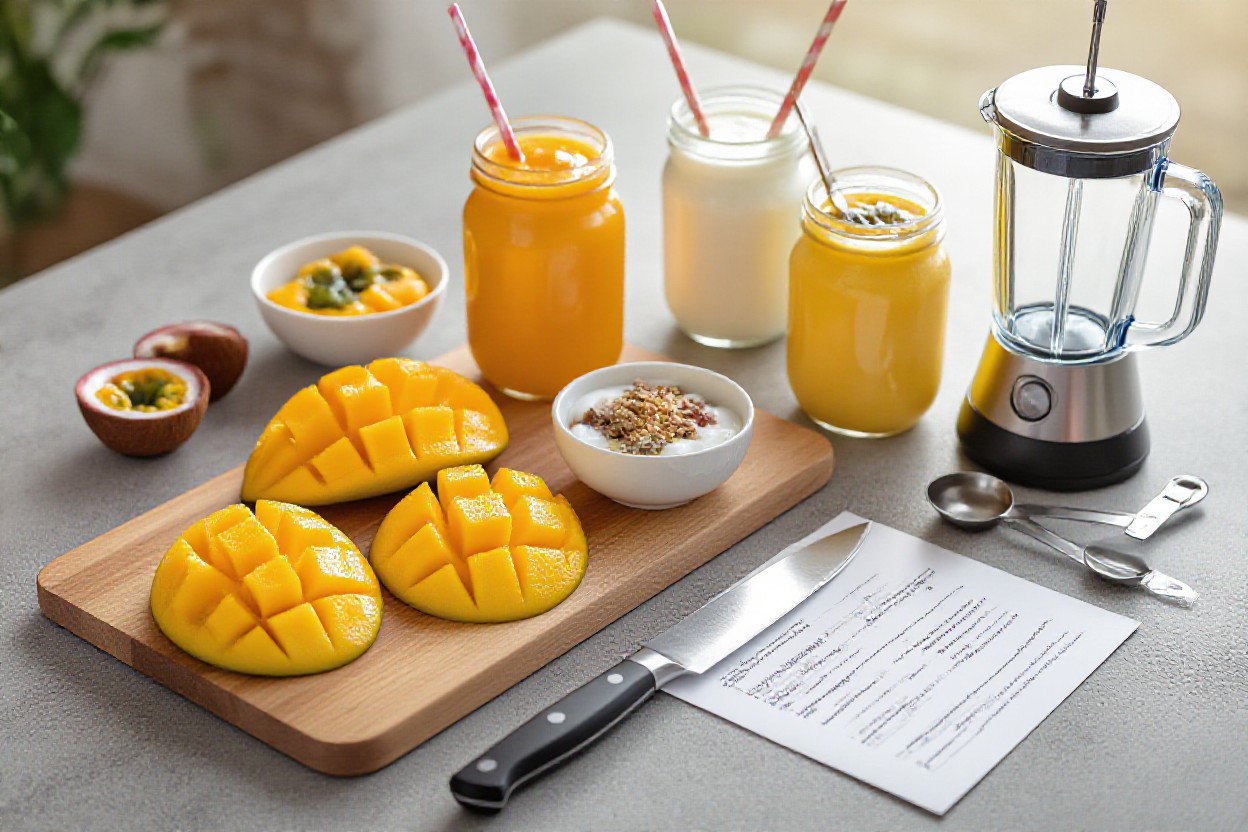
You know those days when you realize at 8 p.m. that coffee and a sad desk lunch basically carried you? That’s where tropical fruit quietly saves the day. You can fold mango into breakfast, stash dried pineapple at work, blend passion fruit into post-gym shakes, then finish with grilled plantain at dinner. And if you want a cheat sheet for what to buy and how to use it, bookmark Your Tropical Fruit Guide so your cart actually matches your health goals.
Creative Ways to Add Them to Meals
Picture your usual meals, then just upgrade the toppings. You toss diced papaya or mango over Greek yogurt, fold pineapple into cottage cheese, stir chili-lime mango into quinoa bowls, or pile grilled peaches and pineapple on tacos. Even a basic sheet-pan chicken turns into a vitamin C bomb when you roast it with mango and red bell pepper. You’re not reinventing dinner, you’re basically just swapping boring garnish for tropical flavor that pulls real macro and micronutrient weight.
Snack Ideas That Make it Easy
Those random snack attacks at 3 p.m. are prime real estate for tropical fruit. You keep a small container of pineapple and cottage cheese, banana with peanut butter, or frozen mango cubes you eat almost like candy. Even 1 cup of fresh pineapple gives you over 80 mg of vitamin C, which already covers your daily needs. You get that sweet hit you want while actually feeding your immune system, not just your sweet tooth.
When you zoom out, snacks are actually the easiest place to sneak in more tropical color without touching your main meals. You can freeze grapes and pineapple for a crunchy-sweet movie snack, roll banana slices in crushed peanuts, or pair mango strips with a small handful of roasted almonds for a more balanced hit of carbs, fat, and protein. Keeping pre-cut fruit in clear containers at eye level in your fridge works surprisingly well because you reach for what you see first, and if you stash dried mango or banana chips in your bag, you basically remove every excuse to fall back on ultra-processed junk. That tiny bit of planning turns each snack break into a mini nutrition upgrade that quietly adds up over the week.
Conclusion
Considering all points, what really sneaks up on you is how a slice of mango or a handful of guava can quietly reshape your whole eating routine without feeling like a diet. You get fiber, vitamins, antioxidants, and legit satisfying sweetness that helps you cut back on processed sugar without white-knuckling it.
When you fold tropical fruits into smoothies, salads, salsas, or quick snacks, you’re not just “being healthy” – you’re upgrading flavor, texture, and energy in one shot. So keep playing with those recipes, tweak them to your taste, and let your daily plate actually work for you.
FAQ
Q: How can tropical fruits actually improve my everyday diet, not just make it prettier on Instagram?
A: Tropical fruits bring a really useful combo to your plate: fiber, natural sweetness, hydration, and a hit of antioxidants in one go. You get vitamins like C, A, and some B-vitamins, plus minerals like potassium and magnesium that support energy, muscle function, and heart health.
They also help you cut down on added sugar because a ripe mango or pineapple already tastes like dessert. Swap sugary snacks with a fruit salad of mango, papaya, and kiwi, and you still feel like you’re treating yourself, not “being good”. That makes healthy choices way easier to stick with long term.
Q: Which tropical fruits are best for weight management and feeling full longer?
A: If you’re looking for filling tropical fruits, reach for ones higher in fiber and water like papaya, guava, mango, passion fruit, and kiwi. Fiber slows digestion, helps keep blood sugar steadier, and basically tells your brain “we’re good, not hungry right now”.
Guava and passion fruit are surprisingly rich in fiber for such small fruits, so they work well in yogurt bowls or blended into smoothies. Papaya and mango make a great base for smoothie bowls, especially if you pair them with protein (like Greek yogurt) and healthy fats (like nut butter or chia seeds) to stay full for hours.
Q: Are tropical fruits too high in sugar to eat regularly if I’m watching my blood sugar?
A: Tropical fruits do have natural sugars, but they come packaged with fiber, water, and a ton of micronutrients, which changes how your body handles that sugar. The key thing here is portion size and what you eat them with, not freaking out over the fruit itself.
If you’re watching blood sugar, pair your fruit with protein or fat, like pineapple with cottage cheese, mango with plain yogurt, or papaya with a handful of nuts. Also, go for whole fruit instead of juice or dried versions, since those spike blood sugar faster and make it easier to overdo it without noticing.
Q: What are some easy, beginner-friendly tropical fruit breakfast ideas that aren’t complicated?
A: For something super simple, you can throw together a tropical yogurt bowl: plain Greek yogurt, chopped mango and kiwi, a spoon of shredded coconut, and a sprinkle of chia seeds. It takes like five minutes, tastes like a vacation, and gives you protein, fiber, and healthy fats in one bowl.
Another easy favorite is overnight oats with tropical fruit. Mix oats, milk or plant milk, a bit of vanilla, and chia seeds in a jar, then in the morning top with pineapple chunks, banana slices, and a bit of passion fruit pulp. If you like smoothies, blend frozen pineapple, banana, and spinach with coconut water for a quick breakfast you can literally drink on the go.
Q: How can I use tropical fruits in savory meals, not just in smoothies and desserts?
A: Tropical fruits do amazingly well in savory dishes, because that sweet-tangy thing they’ve got going pairs nicely with salty, spicy, and smoky flavors. Think mango salsa over grilled fish or chicken, pineapple chunks in a veggie stir-fry, or papaya cubes in a bright salad with lime and chili.
Try a quick mango avocado salsa: diced mango, avocado, red onion, cilantro, lime juice, and a pinch of salt. Toss it together and spoon it over tacos, grain bowls, or grilled tofu. You can also use pineapple in fried rice with veggies and egg for a super satisfying one-pan meal that tastes way more exciting than plain rice and veg.
Q: What are the standout nutrients in popular tropical fruits, and what do they actually do for me?
A: Mango is rich in vitamin C and beta carotene, which your body converts to vitamin A, supporting skin health and immune function. Pineapple brings bromelain, a natural enzyme that can help with protein digestion and may reduce inflammation for some people.
Papaya also has digestive enzymes like papain, plus vitamin C and folate. Kiwi is like a little vitamin C bomb with fiber and vitamin K, while banana is famous for potassium, which supports healthy blood pressure and helps with muscle function. When you mix a few of these in your weekly routine, you’re basically covering a lot of nutrient bases without needing fancy supplements.
Q: How do I build balanced recipes with tropical fruits so I’m not just eating fruit and calling it a meal?
A: A simple way to think about it is this: pick a tropical fruit for flavor and vitamins, then add a protein, a healthy fat, and maybe a high-fiber carb. For example, a balanced tropical smoothie might be mango and pineapple (fruit), Greek yogurt (protein), a spoonful of peanut butter (fat), and oats or flaxseeds (extra fiber and carbs).
For lunches or dinners, use fruit as one element in a bigger bowl. You could make a quinoa bowl with black beans, grilled chicken or tofu, avocado, greens, and a spoon of pineapple salsa on top. The fruit keeps things fun and bright, but the protein, fiber, and fats are what make it a proper meal that keeps you satisfied.
